
Vitamin B Complex
| Cellular Nutrition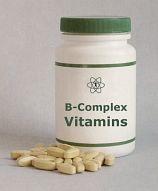
Of the many B-Complex (Bx) formulations and supplements offered by various manufacturers, different benefits, side effects, or adverse reactions may be experienced by different individuals, depending not only on the daily amount, but also the specific type of formulation supplemented:
Equalized B-Complex Vitamins
An Equalized B-Complex contains the same amount with most B-Vitamins (100 mg of Vit B1, 100 mg of Vit B2, 100 mg of B3, etc..., and 100 mcg of biotin, 100 mcg of B12, and 400 mcg to 1 mg of folic acid).
So-called B-Stress Formulations are designed to presumably help people handle stress better, however many people end up feeling more stressed out after taking them. Starting in the '80s, when "Stress Tabs" became popular, many patients came to see Dr. Ronald Roth with stress-related medical symptoms related to excessive Vitamin B intake (see further below).
Ironically, whoever came up with the notion that large amounts of B-Vitamins reduced stress had it all backwards, nevertheless a lot of self-styled "experts" on nutrition perpetuated that myth, and Vitamin Companies quickly jumped on the bandwagon with each producing their own "Stress Formulation" consisting of a high-potency B-Vitamin Complex, with varying amounts of Vitamin C and zinc added to enhance that "stress-fighting" effect.
Balanced B-Complex Vitamins
Supposedly the best choice would be a Balanced B-Complex Vitamin supplement where a different mg or mcg dosage is used for each B Vitamin - sort of putting them in the proper (natural) ratio to one another. However, what ratios are best for which individual, and how would the manufacturer know?
An individual who is prone for gout might need more pantothenic acid (Vitamin B5) but less lecithin, while anyone with a tendency for iron overload would need less Vitamin B1, but much more Vitamin B2. Some of those suffering from hypoadrenalism (Addison's disease) would benefit from extra Vitamin B1 and/or choline for their sodium-raising properties, while sodium-sensitive individuals or anyone with a tendency for hyperadrenalism (Cushing's disease) might benefit from extra Vitamin B2 and folic acid, which have a sodium lowering effect.
Anyone suffering from low blood sugar episodes should avoid large amounts of Vitamin B6 (and Vitamin C), which can cause blood sugar to drop even more, but they are generally helped with extra niacinamide and/ or biotin. There are claims that diabetics may benefit from larger amounts of biotin, but patient feedback and blood sugar measurements have been to the contrary.
Those with a tendency for mild Hyperthyroidism may benefit from PABA, another member of the B-Vitamin complex, but they should be careful taking extra Vitamin B6 (see "Bromine" for additional hyperthyroid info). A higher intake of Vitamin B6 will also increase magnesium retention following long-term oral supplementation, while regular Vitamin B6 injections will more quickly result in a high magnesium / low calcium ratio.
If not matched to a patient's requirements, which frequently happens when Vitamin B6 + B12 injections are given at Weight Loss Clinics, a severe calcium deficiency develops. This by itself - or when aggravated by an overstimulated thyroid from regular Vitamin B6 + B12 shots - can result in insomnia, anxieties, depression, mood swings, heart palpitations, chest pains, bone, joint, muscle pains, and/or other symptoms.
In someone suffering from Hypothyroidism and low sodium, Vitamin B6 supplementation on a long-term basis has the potential to eventually lower thyroid functions even more, although a brief boost will still take place every time Vitamin B6 is injected or taken orally. In addition, Vitamin B6 will only affect T4 (thyroxine) levels, but no conversion to T3 (triiodothyronine) takes place -- causing a T3 / T4 thyroid ratio conflict, so rather than trying to boost thyroid functions with Vitamin B6 injections for weight loss purposes, selenium, tyrosine, and iodine status should be checked and corrected instead.
Another consideration when supplementing larger doses of Vitamin B6 as pyridoxine is the inhibiting effect on Pyridoxal-5-Phosphate (P5P), which is the natural form of Vitamin B6, so if amounts larger than 50 mg are taken per day, or if they are taken on an ongoing basis, the pills should also contain a small percentage as pyridoxal-5-phosphate to avoid the potential of causing neurological damage. However, regardless of the type, excessive intake of both - P5P or pyridoxine - when not needed, may lead to nerve and/or spinal degeneration, so extra Vitamin B6 should be used with caution, or only by someone with an otherwise difficult-to-manage low magnesium / high calcium ratio, (see also "Calcium & Magnesium") and "Mineral Ratios").
Do Vegetarians need to supplement Vitamin B12?
Individuals following a vegetarian lifestyle - and particularly vegetarian children in Western societies, should supplement extra Vitamin B12, since it is not available from vegetarian food sources (see also "Vegetarianism"), while those with insufficient stomach acid and intrinsic factor may have to supplement 1,000 mcg - 2,000 mcg of Vitamin B12 on a daily basis, or get regular Vitamin B12 injections to prevent pernicious anemia. This may also require the addition of folic acid, which interacts with Vitamin B12, otherwise a folate deficiency may develop. However, a high intake of Folic Acid and Vitamin B12 (when not indicated) has been shown to be a risk factor in the development of some cancers.[1]
Type II Diabetics taking the drug metformin may be at risk for lowered Vitamin B12 levels also, while some individuals suffering from Mitral Valve Prolapse (MVP), right-sided coronary artery spasms, or a disposition for panic-anxiety disorder, may have to avoid Vitamin B12 injections altogether, but may benefit from extra Vitamin B15 (calcium pangamate / pangamic acid), DMG, or inositol instead.
• Vitamin B12 deficiency / overdose, Cobalt & Vit B15 interactions.
• Vitamin B12 RDA / DRI, and additional side effects and symptoms.
If a young, healthy individual with normal liver functions were to start out with a theoretically perfect mineral profile, and then were to supplement a daily equalized B-Complex formulation in the 50 mg - 100 mg range, that individual would slowly reshape his or her intracellular chemistry to look something like this:
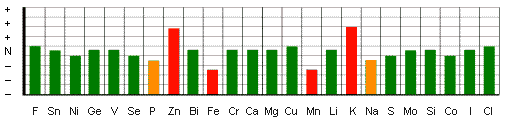
Of course, someone's chemical profile is unlikely to be perfect before starting on B-Complex vitamins, so it will vary from one individual to the next, and when other supplements are added. However, the inhibiting effect of an equalized B-Vitamin complex on iron and manganese (as seen in the graph above), will in people predisposed to iron-deficiency anemia, and/or reactive hypoglycemia cause a pronounced worsening of their symptoms (feeling mentally and physically tired and fatigued). Perhaps this tiring effect was at some point erroneously interpreted as having a stress-reducing effect, hence the subsequent "Stress Tab" designation.
Does a B-Vitamin Complex really help reduce Stress?
When amounts at, or moderately above RDA / DRI levels are consumed, B-Vitamins positively support many metabolic functions, including carbohydrate, fat and protein metabolism, proper nervous system function, food to energy conversion, red blood cell / hemoglobin formation, and they help improve mood and memory, while providing a better stress-coping ability.
However when doses multiple times the recommended daily intake are supplemented, B-Vitamins - like other nutrients - produce stronger therapeutic effects that can vary considerably from one individual to another. Subsequently, depending on age, genetic background, and preexisting medical conditions that impact the body's ability to cope with 50 mg, 75 mg, and 100 mg+ B-Complex formulations, negative results can easily outweigh the benefits that B-vitamins would otherwise provide when supplemented at much lower amounts.
Increased stress-coping abilities frequently require single B-Vitamins, and minerals or trace elements such as calcium with Vitamin D, magnesium, chromium, or even copper, at dosages that have an overall calming effect without depressing thyroid, adrenal, or cardiac functions too much. To help cope with extra stressful situations through a non-drug approach, "stress-coping" / reducing remedies such as tryptophan (5-HTP), l-tyrosine, taurine, GABA, or St. John's Wort may be considered.
Even "healthy" individuals who regularly take mega-doses of B-Vitamins - or "Super B-Complex Vitamins" - may eventually experience high B-Complex-induced anxieties, "nervous energy" (like a hyperactive child), or "restless sleep" when taken later in the day. As a result, the best time to take a B-Complex formulation is earlier in the day. If single B-Vitamins are supplemented, they should be taken according to their calming or stimulating effect - either later or earlier in the day - which is covered for each B-Vitamin on Page 2.
Since a major effect of taking high B-Complex vitamins for a lengthy time period is an increase in zinc and potassium retention, this could become quite detrimental for someone who is prone for Prostatitis, ovarian cysts, painful menstruation, chronic bladder infections, or inflammatory gallbladder disease. However B-Vitamins might benefit someone with mild cirrhosis of the liver, some types of hepatitis, classic Migraine Headaches, or any other number of high iron / manganese-storage types of medical conditions. Unfortunately those benefits are quite mild, and only seen in younger individuals, while diminishing towards middle age and beyond.
High B-complex vitamins would be totally contraindicated with ovarian or testicular cancer, which go hand in hand with very high cellular zinc and/or potassium levels, whereas a low potassium-related bladder problem (interstitial cystitis), or an enlarged, but benign prostate condition, may benefit from extra B-Vitamins.
B-Complex raises total cholesterol and triglyceride levels, and aggravates preexisting high bile acid-related complaints, but it would be advantageous for those whose levels are on the low side. (Total cholesterol or total triglyceride levels are not to be confused with artery-clogging aspects and their role in heart disease).
While B-Vitamins may be helpful for high estrogenic-types of PMS (volatile, angry moods), larger amounts may worsen low estrogenic, depressive-types of PMS, with a greater potential of causing suicidal episodes in prone women, in which case single B-Vitamins need to be specifically matched to be effective.
Some individuals experience "burning muscles" or a general increase in muscle tension, (tight muscles), headaches, digestive problems and/or nausea as a result of excessive B-Complex supplementation.
An overdose or high intake of B-Vitamins can trigger heart palpitations, high blood pressure, or major complications in patients with congestive heart disease, above-normal thyroid, or above-normal adrenal functions. And as mentioned, it may trigger, or aggravate existing nervous conditions, insomnia, anxieties, or stress disorders in younger, more hormone-driven individuals.
On average, those with a low cardiac output, or whose zinc and potassium levels are naturally on the low side and thus exhibit a sluggish metabolism, are best suited to supplement higher amounts of B-Vitamins, as their system would actually benefit from the stress-inducing and weight-loss / metabolism-stimulating effect experienced following a higher intake of B-Vitamins, provided none of the above contraindications apply.
Unless someone is certain that they exhibit a chemical profile which would benefit from a high intake of B-Complex vitamins, it would be prudent to stay on the safe side and not exceed a 10 mg - 15 mg range.
Some B-Vitamins, particularly folic acid, Vitamin B6, Vitamin B12, choline, and PABA reduce blood levels of Homocysteine, which is an amino acid believed to contribute to cardiovascular disease by damaging the endothelium, a thin layer of cells that protect the artery walls. Less than 1 mg of folic acid per day is sufficient to lower homocysteine, however despite the resulting decrease in its levels, there is conflicting evidence [2] on a subsequent improvement with Coronary Heart Disease.
Folic acid is protective against neural tube defects [3] and possibly other birth defects in newborns, for which up to 5 mg / day may have to be supplemented in high risk cases, however supplementation should ideally be started 2-3 months before conception takes place. UV exposure is associated with decreased folate levels.
Vitamin B2 / Riboflavin is responsible for the (harmless) bright yellow urine following its supplementation by itself, or as part of a B-Vitamin complex.
 Manganese may help with some symptoms of Parkinson's disease such as muscle rigidity and twitching...
 Research shows that phytosterols such as beta-sitosterol may help normalize the function of natural killer cells and T-helper lymphocytes...
 Iron deficiency may be suspect with some forms of ADHD. 84% of children with ADHD were found to have abnormally low levels of ferritin...
 A high intake of B Vitamins can trigger heart palpitations, HBP, major complications in patients with congestive heart disease...