
Selenium and Sulfur
| Cellular Nutrition
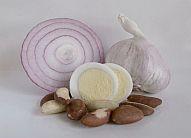
Selenium (Se) and Sulfur (S) are associated trace element / mineral pairs, considered essential to human health. While selenium supplements have been available for many years, sulfur requirements had to be met mostly through dietary sources, primarily eggs, onions and garlic until supplements became available in the mid 1990s. This solved the problem for individuals with below-normal sulfur (or sulphur) levels who couldn't tolerate these foods.
With MSM (methylsulfonylmethane) entering the market, it immediately became so much easier to deal with medical conditions requiring larger amounts of sulfur [1] as part of their treatment. Both, selenium and sulfur bind to a number of heavy, or toxic metals, with selenium being protective against cadmium, arsenic, mercury, and lead, while sulfur (being to a lesser degree protective of the same), is helpful to lower aluminum levels.
Sulfur interferes with the storage of copper, an essential trace element, however with copper levels being on the high side with many people, this is generally a positive effect. It is interesting that patients with normal or below-normal copper levels rarely exhibit deficient sulfur levels. In fact, the benefits of sulfur-containing supplements (Glucosamine Sulfate, MSM) on some forms of arthritis are not just a result of their positive effect on cartilage regeneration, but are largely based on lowering elevated copper levels which promote joint degeneration, particularly - or more so - on the right side of the body.
Of course, on those rare occasions when copper is actually deficient, sulfur containing supplements - just like larger amounts of Vitamin C - should not be used, as they could trigger, or worsen existing inflammatory conditions.
In addition, individuals with a tendency for blood sugar disorders (diabetes) should be aware of potential negative effect on blood sugar management when taking glucosamine sulfate.
Possible adverse or side effects of consuming higher amounts of sulfur-containing foods or supplements such as glucosamine sulfate, MSM, methionine, taurine, cysteine / cystine... include diarrhea, flatulence / gas, and abdominal bloating, while a small number of patients have experienced a "burning" sensation in their stomach.
With sulfur being a calcium, copper, and potassium antagonist, a high intake of glucosamine sulfate, or MSM may worsen low calcium-related disorders such as insomnia, fatigue, anxieties, or bone loss, aggravate low potassium-related cardiac, or renal / genitourinary conditions, or worsen low copper-related infections.
Various placebo-controlled studies have shown that 50 - 60% of test subjects had a positive response to a variety of joint / musculoskeletal types of injuries or arthritis as a result of supplementing MSM as a sulfur source. Equally impressive were placebo-controlled trials that showed improvement in hair growth, brilliance and thickness of hair fibers, as well as an overall improvement effect of 80% in regard to nail health, strength, thickness, and appearance.
Other studies showed sulfur to be effective for faster wound healing, parasitic infections, reduced severity of sun burns, reduced allergic reactions, improved lung functions, including asthma, and along with Vitamin C, sulfur helps to maintain elasticity and suppleness of the skin.
MSM also reduces lactic acid and related muscle soreness. That mechanism can benefit cancer patients when large amounts of MSM are taken, as it interferes with the increased glucose synthesis from lactic acid. This Cori cycle loop, where lactic acid is released by the tumor, converted in the liver to glucose, and then taken up again by cancer cells, is one reason many cancer patients experience cachexia, a common wasting syndrome with cancer that causes weight loss, anorexia, fatigue, weakness, shortness of breath, and muscle atrophy.
All body cells contain sulfur-containing compounds. Those of primary importance in nutrition include cysteine, methionine, homocysteine, taurine, chondroitin, heparin, fibrinogen, thiamine, biotin, lipoic acid, Coenzyme A, glutathione, and inorganic sulfate.
An important function of sulfur is its role in carbohydrate metabolism, where sulfur is a component of insulin, the hormone secreted by the pancreas essential for carbohydrate metabolism. So since low sulfur can result in lowered insulin production, adequate amounts of sulfur in the diet is helpful in the prevention of diabetes. However, there are some medical disorders that present with above-normal levels of cellular sulfur and/or selenium, in which case food or supplemental sources of sulfur or selenium should be adjusted accordingly:
Crohn's disease, a debilitating, chronic, and inflammatory disease of the gut is one condition where all sulfur (and sometimes selenium) sources should be kept to a minimum. In addition, diets should be kept as bland as possible to keep any flare-ups of Crohn's at bay, and rather than following general "wholesome" dietary advice, meals should be more processed and refined, with special emphasis on avoiding whole-grain products. This includes husks of corn / popcorn, wild rice, oats, nuts, seeds, beans, fiber-rich foods, lettuce, skins of fruit, most raw vegetables and greens. In contrast, edible clay has a favorable effect on Crohn's disease.
Lou Gehrig's disease, or Amyotrophic Lateral Sclerosis (ALS) is another disorder that presents with above-normal sulfur and selenium levels, which also requires avoidance of sulfur and selenium-rich supplements and/or foods, particularly the big three - eggs, onions, and garlic, although it should be emphasized that dietary sources are not the cause of Lou Gehrig's disease, but excessive storage of cellular sulfur and selenium. Nutritional factors that inhibit sulfur and selenium activity are listed below under "Antagonists and Inhibitors." In contrast, some rare forms of ALS or Parkinson's-like diseases are attributable to mercury poisoning, in which case selenium supplementation can be a consideration for its mercury-lowering effect.
Alzheimer's disease - like Lou Gehrig's disease - is affected by sulfur (and selenium) intake as well, however, corresponding to the progression of the disease, sulfur levels become proportionally deficient to a point of no longer being measurable with terminal cases. So with Alzheimer's disease, the exact opposite dietary recommendations to ALS apply, where sulfur-containing supplements (MSM, glucosamine sulfate, methionine, taurine, cysteine / cystine), and sulfur-rich foods (eggs, onions, garlic) should be increased. (for details see "ALS / Lou Gehrig's Disease" and "Alzheimer's Disease").
Copper - like calcium - becomes bio-unavailable at excessive storage levels, and as such may trigger similar medical conditions at high levels as it does at low levels, whereby a number of co-factors are required to help with its metabolism.
Sulfur, Vitamin C, chromium and molybdenum are all co-factors, which help normalize copper levels, and/or increase its bioavailability, and consequently help with related physical problems such as spinal / joint and vascular degeneration, or mental / emotional problems such as moodiness, "foggy" mind, memory problems, confusion, or ADD / ADHD.
Selenium supplementation is an effective way to reduce excessive mercury levels. Dr. Ronald Roth had monitored on a number of occasions a sharp drop in selenium levels when dental amalgams were removed, and where subsequently selenium slowly returned to previous levels again over a three to four week time period.
When people have no heavy or toxic metal concentrations in their body (that bind to selenium), there are generally no negative symptoms experienced when taking about 200 mcg of selenium a day, however when selenium is very low when first supplemented (perhaps due to toxic / heavy metal storage), and larger amounts are taken, adverse effects are very commonly experienced the first few weeks due to the heavy or toxic metals being eliminated by the body. In that case, Dr. Ronald Roth urges his patients to slowly increase their selenium dose from as low as 25 mcg per day (or even lower), up to eventually the full dose, which generally is around 100 mcg, or sometimes higher, depending on circumstances.
Organic forms of selenium (selenium yeast and selenomethionine, or selenocysteine) are always preferable to inorganic forms such as sodium selenite because of their better absorption and lower toxicity. In contrast, due to its free-radical promoting oxidative nature, inorganic selenium is mutagenic and has caused cataracts at high doses in animal studies, while organic selenium is less toxic, and does not have mutagenic activity.
Selenium deficiency [2] leads to lowered glutathione peroxidase activity (cardiovascular disease) and it is implicated with a higher risk for cancer of the liver (particularly from hepatitis B), lungs, breast, prostate, skin, rectum, and colon. It is unclear whether the lowered risk of developing certain cancers from taking about 200 mcg of selenium per day also applies to individuals who previously exhibited normal levels of selenium, or only to those with lower levels before supplementing that amount.
Although selenium and Vitamin E work together synergistically in that they carry out antioxidant and immuno-stimulating functions, they compete with each other on a biochemical level, where increasing the one requires an increase of the other, otherwise ratio problems occur. The same effect happens to Vitamin E when higher amounts of Vitamin C are supplemented, despite both being antioxidants.
Although there are reports that Vitamin C inhibits selenium absorption by inactivating it in the small intestine or stomach, this is not supported by Dr. Ronald Roth's own findings, or those by most other researchers. In fact, ascorbic acid supports selenium uptake by interfering with the inhibitory action of zinc on selenium (and thus making Vitamin C synergistic with selenium instead), particularly when organic forms are used.
On a similar note, while sulfur and molybdenum compete for uptake in plants, supplementing either one in humans helps uptake of the other by inhibiting copper, which is an antagonist to sulfur and molybdenum, so for practical purposes (and confirmed in thousands of clinical applications), they work as synergists with one another. There is an identical relationship between vanadium and selenium against chromium, resulting in the same synergism.
Some people - because of media hype (more is better) - take several hundred mcg of selenium a day, but Dr. Ronald Roth usually advises his own patients against higher amounts - not so much because of selenium toxicity (although that does become a concern at higher amounts), but because of its antagonism to chromium, magnesium, zinc and other nutritional factors. Long-term excessive intake of selenium increases the potential risk of triggering shingles, or developing trabecular osteoporosis, cystadenoma (usually in the throat), an enlarged prostate, reduced glucose tolerance / diabetes, neurological disturbances, or other negative consequences.
Many people get away with mega-supplementation because they take a lot of everything, so one half of what they are taking cancels out the other half. It is when people start to overdose on single items (which they don't actually need), over longer periods of time, that they frequently run into trouble.
 Manganese may help with some symptoms of Parkinson's disease such as muscle rigidity and twitching...
 Research shows that phytosterols such as beta-sitosterol may help normalize the function of natural killer cells and T-helper lymphocytes...
 Iron deficiency may be suspect with some forms of ADHD. 84% of children with ADHD were found to have abnormally low levels of ferritin...
 A high intake of B Vitamins can trigger heart palpitations, HBP, major complications in patients with congestive heart disease...