
Germanium and Silicon / Silica
| Cellular Nutrition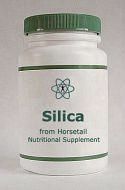
Germanium (Ge) and Silicon (Si) are associated trace elements. While silicon is considered essential for humans, germanium has not been designated as essential at this time, although it should be, since like other essential trace minerals, it has its own cell receptor, and with silicon, affects aspects of the immune system, blood-thinning, as well as joint, and cardiovascular integrity. Silicon is usually supplemented as Silica (SiO2) in the form of Silica Gel, or it is derived from horsetail (a herb) in capsules or tablets, while germanium is generally supplied in its specially processed Organic Germanium (Ge-132) form.
Silicon is present in more than one fourth of the earth's crust and is widely distributed in the soil, plants and water. In the body, silicon is found in highest concentrations in connective tissues such as cartilage, tendons, collagen, blood vessels (particularly the aorta), eyes, the trachea, hair, dental enamel, bone,[1] and skin, specifically the epidermis.
Silicon-deficient diets resulted in retarded growth, poor bone development, and more atherosclerotic arterial plaques in animal studies. Silicon has a similar healing potential on cartilage and joint degeneration as Sulfur, so both can be helpful for various types of arthritis.
Next to Bioflavonoids, silicon (or silica) helps in keeping blood vessel walls healthy, and it has been found that silicon concentrations of the thymus, skin, aorta and other arterial vessels decrease with increasing age and with the onset of atherosclerosis, which is reversible to some extent with oral or intravenous doses of silicon. Silica promotes the union of bone after a fracture, in contrast to calcium, which can actually slow the healing process or interfere with it altogether when calcium levels are on the high side. In contrast to nutritional forms of silicon, "Silicone" products with an "e" at the end are manufactured siloxane polymers.
Silica (silicon dioxide) can be taken either internally, or applied externally as Slica Gel. Potential side effects from the internal use of silica gel include stomach, or skin irritations, while silica from horsetail extract is well tolerated, although some skin changes may develop on very rare occasions with excessive supplementation.
Additional rich sources of Silicon / Silica are various types of edible clay (medicinal earth), such as as Argital clay, Argiletz clay, Bentonite (Terramin, Montmorillonite, Pascalite, Redmond, Wyoming) clay, Luvos Heilerde (a German clay), Illite clay, Kaolin clay, and a number of other clays, with the silica content varying considerably between clay formulations and their mineral composition:
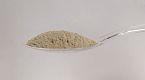
Clay comes in a variety of colors - white, green, grey, blue, red, pink, yellow - all of which indicate higher levels of specific elements, with red clay for instance, containing more iron oxide. All types of clay have an anti-inflammatory effect, help neutralize toxic metals or pathogens from the digestive tract, and promote a healthy gut flora. It is important to choose a quality clay product free of toxic contaminants.
To avoid constipation, powdered clay should be taken with sufficient amounts of water, or bought in hydrated (liquid) form. For instance, sodium bentonite has a greater swelling capacity, and can therefore be more constipating than white kaolin clay. Edible clay is highly beneficial for people suffering from foul-smelling stools, flatulence / intestinal gas, chronic diarrhea, ulcerative colitis, Crohn's disease, or IBS (irritable bowel syndrome).
Other uses of clay range from treatments for anemia, skin blemishes, yeast infections, or morning sickness, all the way to being a superior remedy for bone loss.[2] Because of its ability to inhibit or neutralize toxic and non-toxic compounds in the body, clay should be used with caution, or under medical supervision when taking prescribed medications, since their potency may be affected by the internal use of clay.

Germanium (Ge) used to be readily available around the globe, but it was taken off the shelves in a number of countries after some practitioners, and patients themselves, started using it to treat cancer,[3] and after reports of kidney damage surfaced from using germanium dioxide (not germanium lactate / citrate), following its supplementation. However, the organo-germanium form, bis-carboxyethyl germanium sesquioxide (Ge-132), developed by Kazuhiko Asaia of Japan in 1967, is a safe and effective compound that can be used for a variety of medical problems ranging from viral infections to cancer, which require improved oxygenation and immune support. GE-132 is further known to enhance the immune system by stimulating the production of natural killer cells and lymphokines such as IFN (Y), interferon, macrophages, and T-suppressor cells.
Both, germanium and silicon have somewhat of a blood thinning effect: Germanium, by inhibiting calcium and increasing phosphorus and silicon, by inhibiting magnesium and increasing sodium retention. Individuals who most benefit from extra germanium (provided its levels are below-normal) are those who would generally also benefit from the blood-thinning effect of alcohol, but for whatever reason will not, or cannot consume any.
They include people with either very high VLDL triglyceride levels, below normal protein or phosphorus levels, very high calcium levels, and/or those individuals suffering from poor peripheral circulation due to atherosclerosis.
Blood thinners, omega 3 EFAs, and alcohol increase germanium levels, while with the exception of alcohol, all simple sugars or carbs, but not complex carbs reduce germanium levels. On average, there is typically an inverse relationship between low germanium, and raised VLDL triglycerides.
With some variation, the same principle of what applies to germanium also applies to silicon. Blood thinners and alcohol increase silicon levels, however, instead of an omega 3 EFA / germanium interaction, there is an omega 6 EFA / silicon interaction, where one helps raise the other (and vice versa), while saturated fats and transfatty acids (but not polyunsaturated or monounsaturated fats) inhibit silicon. There is also an inverse relationship between low silicon levels and raised LDL cholesterol.
Calcium is the most potent germanium antagonist, with phosphorus being synergistic with germanium, while magnesium is the most potent silicon antagonist, with sodium being synergistic with silicon. This mutual calcium-germanium and magnesium-silicon antagonism however only takes place at close to normal levels. As calcium levels become excessively high, they will progressively inhibit germanium absorption to a point where supplementation of even larger amounts of germanium will no longer result in increased levels, neither will germanium be able to lower calcium any longer.
Likewise, excessive magnesium intake will increasingly inhibit silicon absorption, no matter how much silicon is supplemented, and at which point silicon will no longer be able to lower magnesium. Only by raising sodium or phosphorus levels (and decreasing magnesium and/or calcium intake) is it possible to raise germanium or silicon levels again, following the inhibiting action of phosphorus on calcium, and/or sodium on magnesium.
Provided levels match requirements, some Leg Ulcers respond to germanium supplementation when used for left-sided cases, and silicon / silica supplementation when used for right-sided cases. Leg ulcers (on either side) also benefit from Activated Charcoal dressings, or the topical application of Medicinal Clay.
 Manganese may help with some symptoms of Parkinson's disease such as muscle rigidity and twitching...
 Research shows that phytosterols such as beta-sitosterol may help normalize the function of natural killer cells and T-helper lymphocytes...
 Iron deficiency may be suspect with some forms of ADHD. 84% of children with ADHD were found to have abnormally low levels of ferritin...
 A high intake of B Vitamins can trigger heart palpitations, HBP, major complications in patients with congestive heart disease...