| Acu-Cell Analysis | Acu-Cell Nutrition | DisordersDiets & MLM | Mineral Ratios | Tin & Health | Spiritual Health |

| Links & Downloads |  HOME PAGE  |                                                 
Acu-Cell Nutrition - Molybdenum & Vanadium
Vanadium
Molybdenum
When assessing Cellular Nutrition with Acu-Cell Analysis, only essential, biological elements that have
their own cell receptors are measured.  They are neurologically arranged into left-sided and right-sided
groups and are discussed in associated pairs, as they function as an inseparable, interdependent unit:
       _______________________________________________________________________

        CalciumMagnesium  PhosphorusSodium
        IronManganese  ZincPotassium
        SeleniumSulfur  TinIodine
        GermaniumSilicon  BismuthLithium
        NickelCobalt  ChromiumCopper
        FluorideChloride  VanadiumMolybdenum
       _______________________________________________________________________

        |  Boron  |  Bromine  |  Strontium  |  Bioflavonoids  |  Vit A D K  |  B12 B15 C E  |  B-Complex  |
       _______________________________________________________________________

Trace mineral symptoms of excess or deficiency are generally one-sided, depending on their ratios to
other chemical members, and depending which group they are neurologically assigned to.  In the event
of calcification, it is not a high calcium level that results in the formation of a stone or spur, but calcium
being high in ratio to associated or interactive elements.
For instance, phosphorus and zinc have both left-sided cell receptors, so if either level is low in ratio
to calcium, calcification would only take place on the left side of the body, whereas the cell receptors of
manganese or magnesium are right-sided, as a result, any calcification would develop on the right side
of the body only.
The same rules apply to most nutrition-related inflammatory or degenerative conditions, so successful,
non-symptomatic treatments require the application of those same principles.  Since intracellular and
serum levels of nutrients represent different physiological and pathological processes, abnormal levels
seen in one medium are not necessarily reflected in the other, so they need to be interpreted differently.

==============================================================================
   
Vanadium & Molybdenum:  Both elements share left / right-sided cell receptors and are considered
essential to human health.  When either vanadium (V) or molybdenum (Mo) test below normal, most of
the time - at least in developed parts of the world - it is as a result of their antagonists being too high,
and less often because of insufficient dietary intake.
Copper and chromium are one of the closest associated trace mineral pairs, so since copper is virtually
always higher than chromium, molybdenum (being a copper antagonist) is nearly as often lower than
vanadium.  One exception may be excessive sugar intake, which has a tendency to deplete chromium,
and to a lesser extent vanadium (chromium and vanadium are also antagonists, but share similar
attributes toward insulin / glucose management).

Excessively high copper levels are generally found with many joint degenerative-types of conditions,
whereby next to sulfur-rich supplements, molybdenum and chromium can also be helpful with these
arthritic disorders as a result of lowering copper.  When molybdenum and/or vanadium levels are far
below normal, there is a greater occurrence of spinal degeneration - with or without the presence of
high copper, although when copper is also very high, it very likely has been a contributing factor.

Ankylosing Spondylitis is a classic example where both, molybdenum and vanadium are excessively
low, and their antagonists are excessively high.  In addition, calcium and magnesium are very high as
well (which have a degenerative effect when elevated), contributing to the degenerative nature of this
condition:
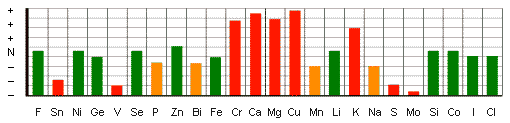
typical mineral profile with Ankylosing Spondylitis
In addition to very low molybdenum many times accompanying various forms of spinal degeneration,
ongoing dizziness is another factor with craniocervical disturbances, or those of the cranial ganglia,
and it isn't always clear which came first - the symptoms, or the low molybdenum - unless a known
injury triggered the problem.  Nevertheless, if matched to the problem, I have seen molybdenum relieve
the dizziness within a few hours following its supplementation.
To a much lesser extent the above also applies to vanadium -- at least in theory.  In practice, vanadium
rarely becomes as deficient as molybdenum.  In fact, it is very uncommon that vanadium would require
supplementation at all (ankylosing spondylitis being a rare exception), because of the chemical inter-
actions it is part of, and where molybdenum and chromium levels would both have to be much higher
than vanadium.

Molybdenum is a component of xanthine oxidase, aldehyde oxidase, and sulfite oxidase, which are
important enzyme systems.  Xanthine oxidase is involved in converting nucleic acid to uric acid, a
waste product of protein / purine metabolism, and although elevated uric acid can cause gouty attacks
in susceptible individuals, normal uric acid levels are actually beneficial, as they have antioxidative
properties and protect cells from free radicals.  I have not seen moderate molybdenum supplementation
cause gout in patients who exhibit low molybdenum levels even when they were prone for suffering from
gout attacks, however very high molybdenum intake
is capable of triggering inflammatory joint disease.

Aldehyde oxidase helps in the oxidation of carbohydrates, and sulfite oxidase helps to detoxify sulfites,
which used to be common food preservatives (salad bars), and which some sensitive individuals have
a severe allergic reaction to.
While sulfur and molybdenum compete for uptake in plants, supplementing either one in humans
helps uptake of the other by inhibiting copper, which is an antagonist to sulfur and molybdenum, so for
practical purposes (and confirmed in thousands of clinical applications), they work as synergists with
one another.  There is an identical relationship between vanadium and selenium against chromium,
resulting in the same synergism.

In animal studies, vanadium has been found to function similarly to insulin by helping to maintain blood
glucose levels the same as in the control group, despite lower serum insulin, while at the same time
making cell membrane insulin receptors more sensitive to insulin.
In human studies, daily insulin requirements in Type I diabetics decreased by as much as 14%, and in
Type II diabetics, there was an increase in insulin sensitivity observed following vanadium treatments
using either vanadyl sulphate or sodium metavanadate.

So why don't doctors tell their patients to supplement vanadium in order to reduce insulin requirements?
Well, perhaps some studies just don't compare to clinical applications in the real world.  My own patient
feedback has not been favorable to vanadium supplementation so far for diabetes.  Instead of reducing
insulin requirements, blood sugar had
gone up following vanadium supplementation!
Both, vanadium and molybdenum have anticarcinogenic (anti-cancer) properties in regard to breast
cancer (V+Mo) in animal models, and esophageal cancer and stomach cancer (Mo) in humans, which
may be due to the copper-inhibiting effect of molybdenum, or possibly by Mo protecting the body from
nitrosamine formation as a result of consuming foods (meats or vegetables) high in nitrates or nitrites.

According to some sources, supplementing vanadium has the potential to improve athletic performance
because of the anabolic effect of vanadyl sulfate being similar to insulin (supposedly resulting in higher
liver and muscle glycogen stores), however the validity of that claim is not universally accepted.
For individuals suffering from bipolar / manic-depressive illness, there is evidence of possible adverse
effects from increased vanadium intake due to its causative or aggravating impact on reduced sodium
pump activity.

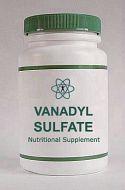
Short of minimal amounts present in some multi-mineral formulations, the effects of supplementing
higher amounts of vanadium (as vanadyl sulphate) on a regular basis - when not indicated - can have
detrimental side effects that may include anything from various aches and pains and flu-like symptoms
(partly as a result of inhibiting chromium), to eventually vanadium causing all kinds of bizarre, chemical
imbalances.  Supplementing higher amounts of vanadium can also cause a very noticeable green
discoloration of the tongue.  ¤
==============================================================================

Dietary Reference Intake (DRI) is the latest term replacing daily dietary reference values such as
Adequate Intake (AI),  Tolerable Upper Intake Level (UL),  Estimated Average Requirements (EAR),
Nutrient Reference Value (NRV),  and Recommended Dietary Allowance / Intake  (RDA / RDI).

Vanadium / Vanadyl Sulfate:Molybdenum:

DRI (RDA):noneDRI (RDA):newold
 0-6 months2mcg30mcg
 6-12 months3mcg40mcg
 1-10 years17-34mcg75mcg
 11-18 years43mcg150mcg
18 years + (suggested)100mcg+18 years +45mcg250mcg+
 pregnant / lactating:+5mcg

Therapeutic Range:1mg - 100mgTherapeutic Range:0.5mg - 2.5mg+
______________________________________________________________________________

Cellular / Intracellular Attributes and Interactions:

Vanadium Synergists:Molybdenum Synergists:
Selenium (see text above), zinc, fluoride,Sulfur (see text above), potassium, chloride

Vanadium Antagonists / Inhibitors:Molybdenum Antagonists / Inhibitors:
Chromium, chloride, calcium, potassium, iodine,Copper, fluoride, magnesium, zinc, tungsten,
sodium, sulfur, rutin, sugar,phosphorus, selenium, tin, hesperidin,

Low Levels / Deficiency - Symptoms and/or Risk Factors:

Vanadium:Molybdenum:
Spinal degeneration, ankylosing spondylitis (withSpinal degeneration, ankylosing spondylitis
elevated molybdenum, calcium and magnesium),(with high vanadium, calcium and magnesium),
reduced growth and reproductive ability in animals,higher risk for several cancers, insufficient uric
elevated cholesterol,acid, elevated triglycerides,

High levels / Overdose / Toxicity / Negative Side Effects - Symptoms and/or Risk Factors:

Vanadium:Molybdenum:
Arthritis, aching bones, jaw, teeth, tonsils, ears,Skin eruptions, itchy skin, inflammatory spinal /
weakened immune system, chronic colds,joint disease, trabecular bone loss (spine, end-
gastrointestinal problems, trabecular bone loss,part of bone), decreased growth in all species,
______________________________________________________________________________

Vanadium Sources:Molybdenum Sources:
Vegetable oils, fats, olives, black pepper, seafood,Grains, organ meats, (soy) beans, lentils. ¤

==============================================================================

General recommendations for nutritional supplementation:  To avoid stomach problems and promote
better tolerance, supplements should always be taken earlier, or in the middle of a larger meal.  When
taken on an empty stomach or after a meal, there is a greater risk of some tablets causing irritation, or
eventually erosion of the esophageal sphincter, resulting in Gastroesophageal Reflux Disease (GERD).
It is also advisable not to lie down immediately after taking any pills.
When taking a very large daily amount of a single nutrient, it is better to split it up into smaller doses to
not interfere with the absorption of other nutrients in food, or nutrients supplemented at lower amounts.

______________________________________________________________________________
Copyright © 2000-2008  Ronald RothAcu-Cell Nutrition: Vanadium & Molybdenum
  
| Vitamin C Supplementation | B-Complex Vitamins | Bioflavonoids, Flavonoids & Polyphenols | High / Low Carb-Fat-Protein Diets |
| Eat Right 4 Your Type - Blood Type Diet | Multi-Level-Marketing / MLM Products & Coral Calcium | Sterols, Sterolins & Beta-Sitosterol |
| Vegan / Vegetarian / Vegetarianism | Simple, Refined & Complex Sugar, Glycemic Index, Glycemic Load & Satiety Index | Cocoa & Chocolate |
| Acu-Cell Disorders - Conditions & Diseases A - Z | ADD / ADHD & Behavioral Problems | ALS / Lou Gehrig's Disease | Alzheimer's Disease |
| Bone Loss / Osteoporosis | Cancer | Helicobacter Pylori & low Stomach Acid | Hypoglycemia / Low Blood Sugar | Muscle Spasms & Cramps |
| Migraine Headaches | Prostatitis | Bismuth | Boron | Bromine | Calcium | Chloride | Chromium | Cobalt | Copper | Fluoride | Germanium | Iodine |
| Iron | Lithium | Magnesium | Manganese | Molybdenum | Nickel | Phosphorus | Potassium | Selenium | Silicon | Sodium | Strontium | Sulfur | Tin |
| Vanadium | Zinc | Tin - Health Effects & Toxicity | Trace Element & Mineral Ratios | DRI / RDA Nickel & Cobalt + Vitamin C / E / B12 / B15 |
| Vitamin C / E / B12 / B15 Interactions | DRI / RDA B-Complex Vitamins | DRI / RDA Vitamin A / D / K | DRI / RDA Calcium & Magnesium |
| Mineral / Cellular Test - Acu-Cell Analysis | Cellular Nutrition / Acu-Cell Home Page | Spiritual Health & Healing | Suicide & Euthanasia |